Friday, April 24, 2009

Monday, January 5, 2009

Demand for Solar Abroad Growing Extreme

Widespread theft of photovoltaic panels reported in developing countries.

Wednesday, August 8, 2007

The Cost of Coal

This week Mitochondriac is saddened by the trapping of six coal miners in Utah. The miners were first submerged in earth on Monday, August 6 when the mine shaft they were working caved in around them. What caused the shaft to implode is currently a controversial matter. Robert Murray, CEO of the Cleveland based Murray Energy Corp that owns the mine and employs these particular workers, insists that the implosion was caused by an earthquake. Meanwhile, others from the University of Utah maintain that any seismic activity was caused by the collapse, rather than the impetus for the collapse. Either way, six miners are stuck and have likely been buried alive in the Crandall Canyon mine.

Unfortunately, this is not an isolated incident. Coal mining is dangerous business. For a synopsis of recent coal mining incidents, click here. For those of you who don't follow the link, an average of 33 coal miners have died each year in the last 10 years. And these numbers are a big improvement on the previous decade.

As previously reported, half of America's electricity supply comes from coal. Its dominance of other forms of electricity is widely attributed to its low cost. The US Energy Information Administration reports that coal costs $23.59 per ton. In dollars and cents, coal costs 23% as much as petroleum and less than 20% as much as natural gas.

But Mitchondriac wonders about their math. By this author's reckoning, the cost of electricity from coal is 23 bucks, plus 6 American lives. Is it worth it? If America knew the true cost of coal, would we still be sending our own into dangerous mines to retrieve it?

************************************************************************************
The tragedy of the Crandall Canyon mine became a catastrophe when three rescuers were killed while trying to save the six trapped miners. In total, nine people dead. Officials called off the rescue. The miners will remain entombed in that mountain.

Jeff Goodell, author of Big Coal: The Dirty Secret Behind America's Energy Future featured this editorial in the Washington Post on August, 26. The piece says much more about the cost of coal.

Friday, August 3, 2007

Update: House of Representatives considers change in energy policy

The Democratically controlled House of Representatives is presently considering HR 3221, an energy bill that could fundamentally alter US energy policy. The primary change under consideration is whether or not to grant $16 billion in tax credits as incentives for renewable energy. To offset the cost, the Bill would repeal tax credits to oil companies.

The Udall-Platts Amendment is also up for a vote. This Amendment to 3221 would require the adoption of a Renewable Portfolio Standard (RPS) requiring that 15% of America's electricity come from renewable sources by 2020. This Amendment will be voted on first, followed by the Bill.


Noticeably absent from the debate are any changes to Corporate Automobile Fuel Economy (CAFE) standards. Rep. John Dingell, the Chairman of the House Energy and Commerce Committee, led the charge against CAFE changes. Dingell is the longest serving member of the House. He represents the 15th district of Michigan, a backbone of the American automobile industry.

(For a good summary on the situation, click here.)

In sum, the debate is over whether or not it should be US policy to incentivise renewables, and if so, to what extent.

From the right, Ben Lieberman at the Heritage Foundation argues that the bill is a step in the wrong direction. He has several concerns:
  • incentives are only necessary because renewable energy sources can't compete in the open market,
  • energy costs are going to go up, especially for areas of the country that are not ripe for wind energy, and
  • the bill tightens restrictions on access to oil and natural gas, thereby adding to America's dependence on foreign oil.
From the left, Representative Tom Udall defends the Bill, including the inclusion of a RPS.

From the middle, the Washington Post's editorial board argues that the best part of the bill is its encouragement of new technology that would make coal energy cleaner.

What do you think? Whatever you do think, you should let your Representative know. The Capitol Hill Switchboard is 202-225-3121. This policy affects us all.

************************************************************************************
Update: The House passed the Energy Bill, including the Udall-Platts Amendment, on Saturday, August 4. The measure passed by a vote of 241-172, with largely along party lines.

The Christian Science Monitor has pooled some reactions and critiques to the bill here. To get a complete sense of the pros and cons, check it out.

Tuesday, July 31, 2007

Commonly Perceived Truth #2: No Sun, No Solar

Solar Power is defined as: energy from the sun that is converted into thermal or electrical energy. It would thus stand to reason that you need lots of sun to get lots of solar power, right? Not necessarily.

Check out this news from Germany:

New data shows that Germany has become the world’s leader for generating solar power, despite the fact that two-thirds of the country’s annual daylight hours are spent with heavy cloud cover.

Germany produces 55 per cent of the world’s photovoltaic (PV) energy, using solar panels along the country. So far, solar power generates just 3% of Germany’s total energy, but the government hopes to raise that to 27% by 2020.

A law was passed in Germany in 2000 that offers huge incentives for companies to invest in solar power. The law, known as EEG, planned 100,000 PV panels across the country. The figure, however, currently stands at 300,000 panels.

No Sun, No Solar. No Sun, No Problem. In this case, subsidies are more vital than the natural resource (sun) itself.

But these subsidieds must have cost the German government a fortune, right? Let's take a look at the economics. This story explains:

At the heart of the scheme is a "feed-in tariff" giving anyone who generates power from solar PV, wind or hydro a guaranteed payment from the local power company. The power firms are obliged to buy solar electricity for 49 cents per kilowatt hour - or nearly four times market rates.

This can work out at a better return than putting money in the bank. So despite the cloudy weather, the investment pays for itself within 10 years.

So its the local power companies that are paying for the solar boom, not the government. What do they have to say about being legally required to buy energy at four times market rates? Do they recover those cost?

Here is a bit on how those concerns resolved:

Germany’s major conventional power producers, including RWE, E.On, and Vattenfall have also complained about the EEG mandate to purchase renewable energy at fixed prices. For obvious reasons, conventional power producers object to the government’s favorably discriminatory treatment of renewable energy producers who would otherwise not be capable of competing in the marketplace. German power companies brought their complaint unsuccessfully to the European Court, where they argued that Germany’s EEG provision violates EU legislation regarding government assistance to domestic industries.45

Nonetheless, conventional utilities and energy marketers have learned to profit from EEG mandates. Since wind and solar generators produce power mainly during daylight hours, power marketers usually buy renewable energy during the day at stipulated fixed costs and sell it to consumers at even higher rates, especially during peak daytime periods. Cheaper, conventionally-generated power is purchased in larger quantity at night, when demand and tariffs are significantly lower. In 2003, a German energy industry association estimated annual profits from renewable electricity trading at approximately 25 million Euros.

Very interesting. There's, of course, much more to report. For example, Mitochondriac was glad to see that the renewable energy market was producing many German jobs, but disappointed to learn that their demand for photovoltaics (solar panels) has driven the cost of those resources sky high, further stifling solar growth in the U.S. For more detail on some of these issues, this is a good article. Otherwise, Mitochondriac's faithful readers can look forward to more coverage of these issues.

Mitochondriac invites your feedback through the comments section.

Friday, July 27, 2007

Received Tenet/Commonly Presumed Truth #1: Some Basic Facts

First some data:

In 2005, the latest year for which statistics are available,
  • America used 3.8 billion kilowatthours of electricity,
  • 87% of which was used by us in our homes,
  • at an average cost of $1,063 per home.
Brining in $268 billion in annual revenues, the electricity industry represents 3% of America's GDP, dwarfing other giants like pharmaceuticals($143 billion) and airlines($122 billion).

In sum, electricity is a big part of our lives and our economy.

The major sources of America's electricity are:
  • coal (50%),
  • nuclear(19%),
  • natural gas(19%),
  • hyrdo(6.5%),
  • and "other" (5%), including oil, hyroelectric, solar, wind, etc.
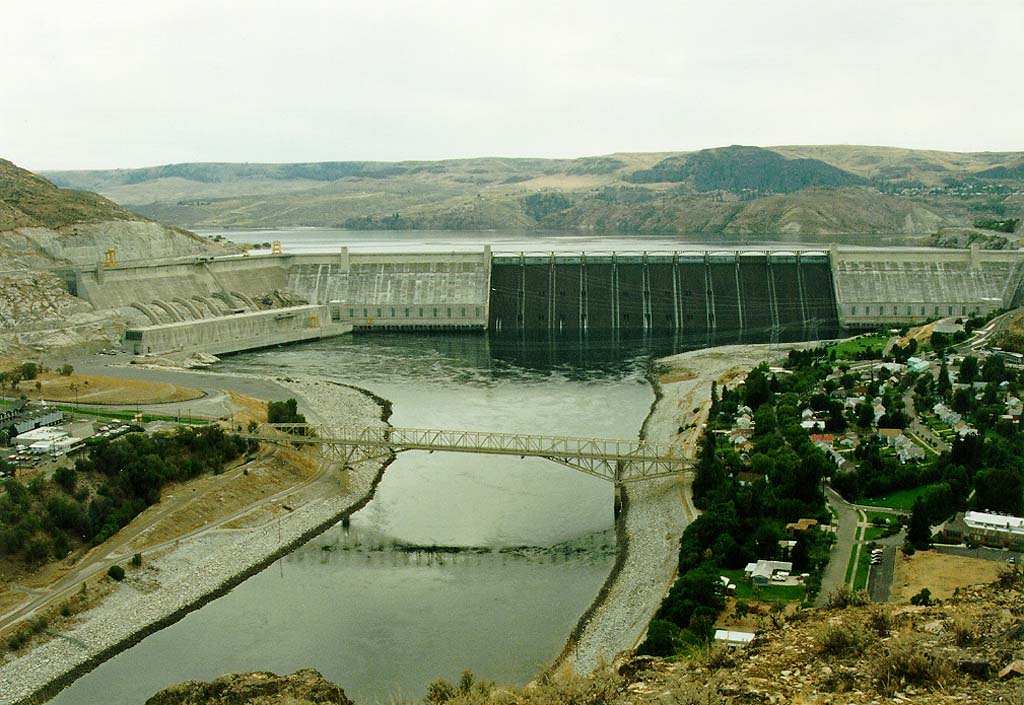
In 2000, there were 2,776 electric power plants in America. The largest producer is a hydroelectric dam, the Grand Coulee, on the Columbia river in Washington. The largest coal plant is Georgia Power's Scherer plant, which gobbles up enough coal per day to require 5, 120 car train loads, all hauled from Wyoming. On the nuclear side, America is lead by the Palo Verde plant outside of Phoenix, Arizona.

This is a massive industry with enormous implications and many, many Received Tenets and Commonly Presumed Truths.


Introtastic

Mitochondriac uncovers the Power Supply of America. It's electric, it's a gas, it's coal in your stocking on an otherwise cheerful christmas morning ... it's a thousand points of light.

The term electricity was first used by Sir Thomas Brown in a work formally known as Pseudodoxia Epidemica, but more casually referred to as a "Enquiries into Very many Received Tenets, and commonly Presumed Truths." With love to Browne, Mitochrondriac aims to continue the Enquiries, focusing on the Received Tenets and commonly Presumed Truths of America's electricity.

Each Mitochondiriac entry will explore one Received Tenet or commonly Presumed Truth regarding America's electricty. Mitochonriac will offer its humble opinion on the validity of the claim and invite you to do the same through the comments section. In the end we shall all know more.

Power Up Power Rangers